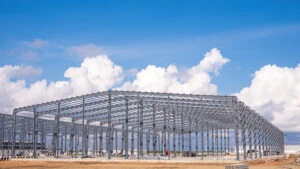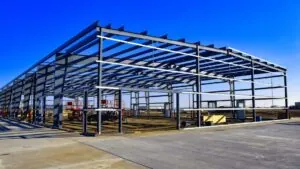
Finding a reliable steel building supplier near me in Canada means more than searching a map: it means matching the right supply model, engineering standard, and delivery reach to your project before you request a single quote. A steel building supplier near me can be a local dealer, a national direct manufacturer, a regional distributor, or a design-build partner, and each model carries different implications for price, lead time, engineering accountability, and post-sale support. This guide walks through every option so you can make a confident, informed decision.
- Supply model matters as much as proximity: a national supplier with coast-to-coast delivery often outperforms a local dealer on engineering depth and price.
- Pre-engineered metal buildings (PEMBs) are factory-fabricated to your site’s snow, wind, and seismic loads before they ship.
- Lead times, erection responsibility, and permit support vary significantly by supplier type.
- Canadian Building Code compliance and CSA standards must be confirmed before signing any supply agreement.
- Cost drivers include steel tonnage, span width, eave height, cladding, insulation, and site-specific engineering, not just the kit price.
Definitions & scope
A steel building supplier is any company that provides the primary structural steel components for a building project. In Canada, this typically means one or more of: a pre-engineered metal building (PEMB) manufacturer, a structural steel fabricator, a kit distributor, or a design-build contractor who sources steel on your behalf.
Pre-engineered refers to a system where the primary frames, secondary framing, roof and wall panels, and trim are all designed as an integrated package at the factory, then shipped flat for field erection. Prefabricated is a broader term that includes modular and panelized systems. Structural steel refers to custom-fabricated wide-flange, HSS, or plate-girder frames engineered to a specific design rather than a catalogue system.
Scope for this guide covers agricultural buildings, garages and shops, commercial and industrial warehouses, and aircraft hangars, all of which Titan Steel Buildings supplies across every Canadian province and territory. The guide does not cover light-gauge residential framing or shipping-container conversions.
For a broader look at the supply landscape, see the Steel Building Supplier in Canada parent page and the companion How to Choose Metal Building Suppliers in Canada guide.
Why this matters
Canada’s geography creates a unique sourcing challenge. A farm operation in Saskatchewan, a warehouse developer in the Greater Toronto Area, and an aviation company building a hangar in British Columbia all need steel buildings engineered to dramatically different climatic loads. The National Building Code of Canada (NBC) and its provincial adoptions set minimum structural requirements, but the specific ground snow load, wind pressure, and seismic zone for your site must be incorporated into the engineering package before a permit can be issued.
Choosing the wrong supplier type can create serious downstream problems. A kit reseller who cannot provide stamped engineering drawings will stall your permit application. A supplier who does not account for your municipality’s local amendments may deliver a building that cannot be legally erected. A distributor who subcontracts fabrication offshore without Canadian quality oversight may deliver steel that does not meet CSA W47.1 or CSA W59 welding standards.
Beyond compliance, lead time is a practical concern. Steel building packages typically require 10 to 20 weeks from order to delivery depending on the supplier’s manufacturing capacity and your project’s complexity. Erection crews in high-demand regions book out months in advance. Understanding the full supply chain before you commit protects your construction schedule and budget.
For context on permit requirements, see the Steel Building Permits in Canada: CSA-A660 Compliance Guide.
Your options
1. National direct manufacturer / partner manufacturer
What it is: A company that designs, engineers, and fabricates the steel building package at its own plant, then ships directly to your site anywhere in Canada. Engineering is done in-house or through a dedicated engineering partner, and the supply chain has no intermediary markup.
How it works: You submit site information (location, dimensions, use, loads). The manufacturer produces stamped engineering drawings, fabricates primary and secondary framing, and ships a complete kit with erection drawings. Some manufacturers also coordinate erection crews.
Best for: Large commercial, industrial, or agricultural projects where engineering accountability, cost efficiency, and coast-to-coast delivery matter. Titan Steel Buildings operates in this model, serving all Canadian provinces.
Limitations: No physical showroom. Buyers must be comfortable working through a design-and-quote process remotely or via site visits by a project manager.
2. Regional dealer / distributor
What it is: A locally based company that resells building packages from one or more manufacturers. The dealer handles the customer relationship; fabrication happens elsewhere.
How it works: The dealer takes your specifications, submits them to a manufacturer, and marks up the package. Some dealers also provide erection services.
Best for: Buyers who prefer a local point of contact and are purchasing smaller, catalogue-size buildings where custom engineering is minimal.
Limitations: Markup adds cost. Engineering accountability can be unclear if the dealer and manufacturer share responsibility. Dealer may represent only one manufacturer, limiting design flexibility.
3. Structural steel fabricator
What it is: A shop that custom-fabricates steel frames, columns, beams, and connections to an engineer’s design. This is conventional steel construction rather than a pre-engineered system.
How it works: A structural engineer of record produces design drawings. The fabricator produces the steel to those drawings. A separate contractor erects the structure. Cladding is sourced independently.
Best for: Very large or architecturally complex projects, multi-storey industrial buildings, or projects where a PEMB’s standard bay spacing does not suit the program. See the PEMB vs. Conventional Steel guide for a detailed comparison.
Limitations: Higher cost per square foot than PEMB for most single-storey applications. Longer design cycle. Requires separate procurement of cladding and roofing.
4. Design-build contractor
What it is: A general contractor who manages both the supply of the steel building package and its erection under a single contract.
How it works: The contractor sources the building package (often from a PEMB manufacturer), arranges the foundation, erects the structure, and completes the building envelope. One contract covers the full scope.
Best for: Buyers who want a single point of accountability and do not want to manage separate supply and erection contracts. Common for commercial and light industrial projects.
Limitations: The contractor’s markup on the steel package adds cost. The buyer has less visibility into the supply chain. Quality of the underlying building package depends on which manufacturer the contractor uses.
5. Online kit supplier
What it is: A company that sells standardized steel building kits through an e-commerce or catalogue model, typically for smaller garages, workshops, and storage buildings.
How it works: The buyer selects a standard size from a catalogue, pays online or by phone, and receives a kit with generic erection instructions. Engineering may or may not be included.
Best for: Small, simple structures where the buyer or a local contractor will self-erect and where the municipality accepts generic engineering.
Limitations: Generic engineering may not satisfy local permit requirements for snow or wind loads. Limited customization. Post-sale support is often minimal. Not suitable for commercial, agricultural, or aviation applications requiring site-specific stamped drawings.
6. Broker / procurement agent
What it is: An intermediary who sources building packages from multiple manufacturers on behalf of a buyer, sometimes internationally.
How it works: The broker solicits quotes from several suppliers, presents options to the buyer, and earns a fee or commission. The buyer contracts directly with the chosen manufacturer or through the broker.
Best for: Large institutional or government buyers who want competitive tendering across multiple suppliers without managing the RFQ process themselves.
Limitations: Broker’s fee adds cost. Quality control and engineering accountability remain with the manufacturer. International sourcing may introduce tariff exposure and CSA compliance risk. See the 2026 Guide to Steel Building Costs and Tariff-Free Procurement in Canada for current context.

Options compared
| Supplier type | Best for | Typical considerations | Durability / limitations |
|---|---|---|---|
| National direct manufacturer | Agricultural, commercial, industrial, aviation; all sizes | Lowest supply-chain cost; in-house engineering; coast-to-coast delivery | Full CSA compliance; no local showroom |
| Regional dealer / distributor | Small to mid-size catalogue buildings | Local contact; markup on package; limited manufacturer choice | Quality depends on underlying manufacturer |
| Structural steel fabricator | Complex, large, or multi-storey structures | Highest design flexibility; higher cost; longer timeline | Custom engineering; separate cladding procurement needed |
| Design-build contractor | Buyers wanting single-contract delivery | Single accountability; contractor markup on steel; less supply-chain visibility | Depends on subcontracted manufacturer |
| Online kit supplier | Small garages and workshops; self-erect | Low upfront cost; limited customization; generic engineering | May not meet local permit requirements |
| Broker / procurement agent | Large institutional competitive tendering | Multi-supplier comparison; broker fee; tariff and CSA risk if sourcing offshore | Accountability rests with chosen manufacturer |
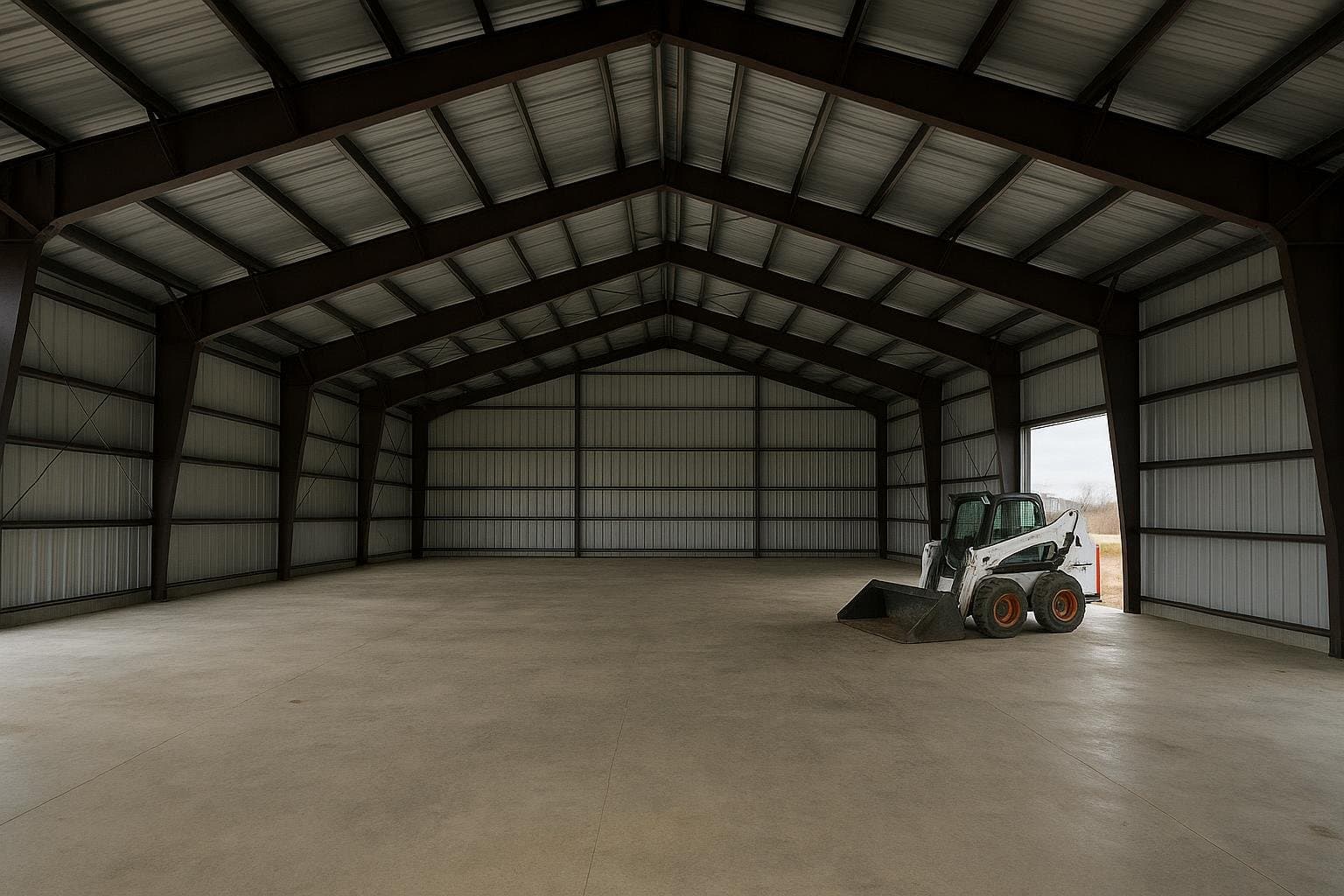
The table above shows that no single supplier type dominates every scenario. For most Canadian agricultural, commercial, and industrial buyers, a national direct manufacturer offers the best combination of engineering accountability, cost efficiency, and delivery reach. Smaller, simpler projects may be well served by a regional dealer or online kit supplier, provided local permit requirements are confirmed before purchase. Complex or large-scale projects may warrant a structural fabricator or a design-build contractor with a proven PEMB supply chain.
How to choose
Use the following decision framework to match your project to the right supplier type.
Choose a national direct manufacturer if your project is larger than a small garage, requires site-specific stamped engineering drawings, spans multiple climate zones, or involves agricultural, commercial, industrial, or aviation use. This model gives you direct access to the engineering team, eliminates intermediary markup, and ensures the building package is designed to your exact site loads. Titan Steel Buildings serves this role coast to coast.
Choose a regional dealer if you want a local face-to-face relationship, your project is a standard catalogue size, and you have confirmed that the dealer’s underlying manufacturer can provide stamped drawings acceptable to your municipality.
Choose a structural fabricator if your project is architecturally complex, multi-storey, or requires column-free spans or load configurations that fall outside standard PEMB catalogues. Budget for a longer design cycle and separate cladding procurement.
Choose a design-build contractor if you want a single contract covering supply, foundation, erection, and envelope, and you are willing to pay a premium for that convenience. Verify which manufacturer the contractor uses and request the engineering credentials directly.
Choose an online kit supplier only if your project is a small, simple structure, your municipality accepts generic engineering, and you or a qualified contractor will manage erection. Confirm permit requirements before ordering.
Choose a broker if you are a large institutional buyer running a formal RFQ process and need competitive quotes from multiple manufacturers. Ensure the RFQ specifies CSA compliance and Canadian engineering standards to avoid offshore quality risk.
For more guidance on evaluating suppliers, see the 2026 Buyer’s Guide to Evaluating Metal and Steel Building Suppliers in Canada.
Costs & timelines
Steel building costs in Canada are driven by a hierarchy of factors. No verified current price schedule is available through this route; the following describes cost drivers in ranked order rather than specific dollar figures. For size-specific pricing context, see the Metal Building Prices and Cost in Canada guide.
| Cost driver | Why it matters | Relative impact |
|---|---|---|
| Steel tonnage (span x length x eave height) | Primary frame weight is the largest single material cost | Very high |
| Snow, wind, and seismic loads | Higher loads require heavier sections and more steel | High |
| Cladding and roofing specification | Panel gauge, coating, and profile affect both cost and longevity | High |
| Insulation system | Fiberglass batt, spray foam, and rigid board vary significantly in cost and R-value | Medium-high |
| Doors, windows, and accessories | Overhead doors, skylights, and ventilation add to the package cost | Medium |
| Erection labour and crane costs | Vary by region, crew availability, and building complexity | Medium |
| Foundation type and site prep | Concrete slab, piers, or grade beam costs depend on soil and frost depth | Medium |
| Delivery distance and access | Remote sites and long hauls increase freight cost | Low-medium |
Lead times from order to delivery typically range from 10 to 20 weeks for pre-engineered packages, depending on manufacturer capacity and project complexity. Erection adds further time depending on crew availability and weather. Planning your procurement 6 to 12 months ahead of your target occupancy date is advisable for most commercial and agricultural projects in Canada.
For erection-specific cost context, see the Steel Building Erection Cost in Canada guide.
Risks & common mistakes
Buying on kit price alone. The kit price is only one component of total project cost. Buyers who compare suppliers on kit price without accounting for engineering, erection, foundation, and accessories often find the lowest-quoted kit becomes the most expensive project.
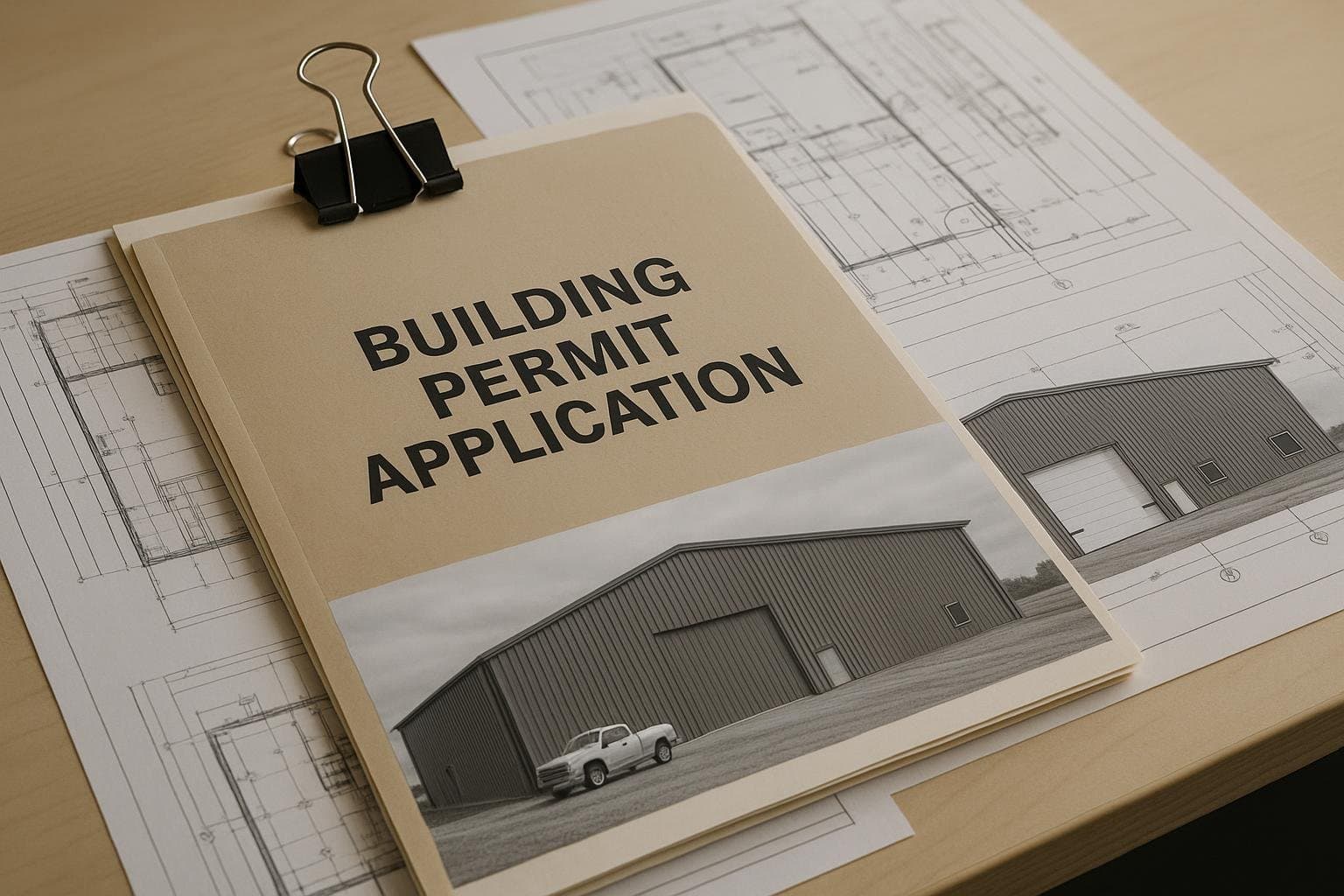
Skipping permit verification before ordering. Every Canadian municipality has its own permit process, and some have local amendments to the NBC. Ordering a building before confirming permit requirements can result in a package that cannot be legally erected on your site.
Assuming generic engineering is sufficient. Online kit suppliers sometimes provide generic or out-of-province engineering. Many Canadian municipalities require stamped drawings from an engineer licensed in the province where the building will be erected. Confirm this requirement with your local building department before purchasing.
Underestimating lead times. Steel building packages are not off-the-shelf products. Buyers who assume they can order and receive a building within a few weeks frequently miss construction windows, especially in agricultural markets where seasonal deadlines are firm.
Ignoring erection accountability. Some suppliers sell kits but provide no erection support. If you do not have a qualified erection crew lined up before the package arrives, you may face costly delays and storage fees.
Not confirming CSA compliance. Buildings fabricated outside Canada may not meet CSA W47.1 (welding) or CSA W59 (welded steel structures) standards. Confirm compliance in writing before signing a supply agreement. The CSA-A660 Compliance Guide explains the relevant standards.
Overlooking insulation and thermal performance. A steel building envelope without adequate insulation will underperform in Canadian winters and may not meet energy code requirements. See the Steel Building Insulation guide for options.
How the process works
- Define your project requirements. Establish the intended use, approximate footprint, eave height, required clear span, site location, and target occupancy date. Collect any municipal zoning or setback information available.
- Request quotes from qualified suppliers. Contact suppliers who can provide site-specific stamped engineering for your province. Provide consistent specifications to each so quotes are comparable. See the Working With a Steel Building Partner Canada guide for what to ask.
- Review engineering and compliance documentation. Confirm that the supplier’s engineering package includes primary and secondary framing drawings, anchor bolt plans, and a letter of compliance with the applicable NBC edition and provincial amendments.
- Confirm permit requirements with your municipality. Submit preliminary drawings to your local building department to identify any site-specific requirements before finalizing the order.
- Place the order and confirm the production schedule. Once engineering is approved and the permit application is in progress, place the fabrication order and confirm the expected ship date. Arrange erection crew and foundation contractor to align with delivery.
- Receive and inspect the package on delivery. Check all components against the packing list before signing off. Report any discrepancies to the supplier immediately. Store panels and trim off the ground and covered if erection is not immediate.
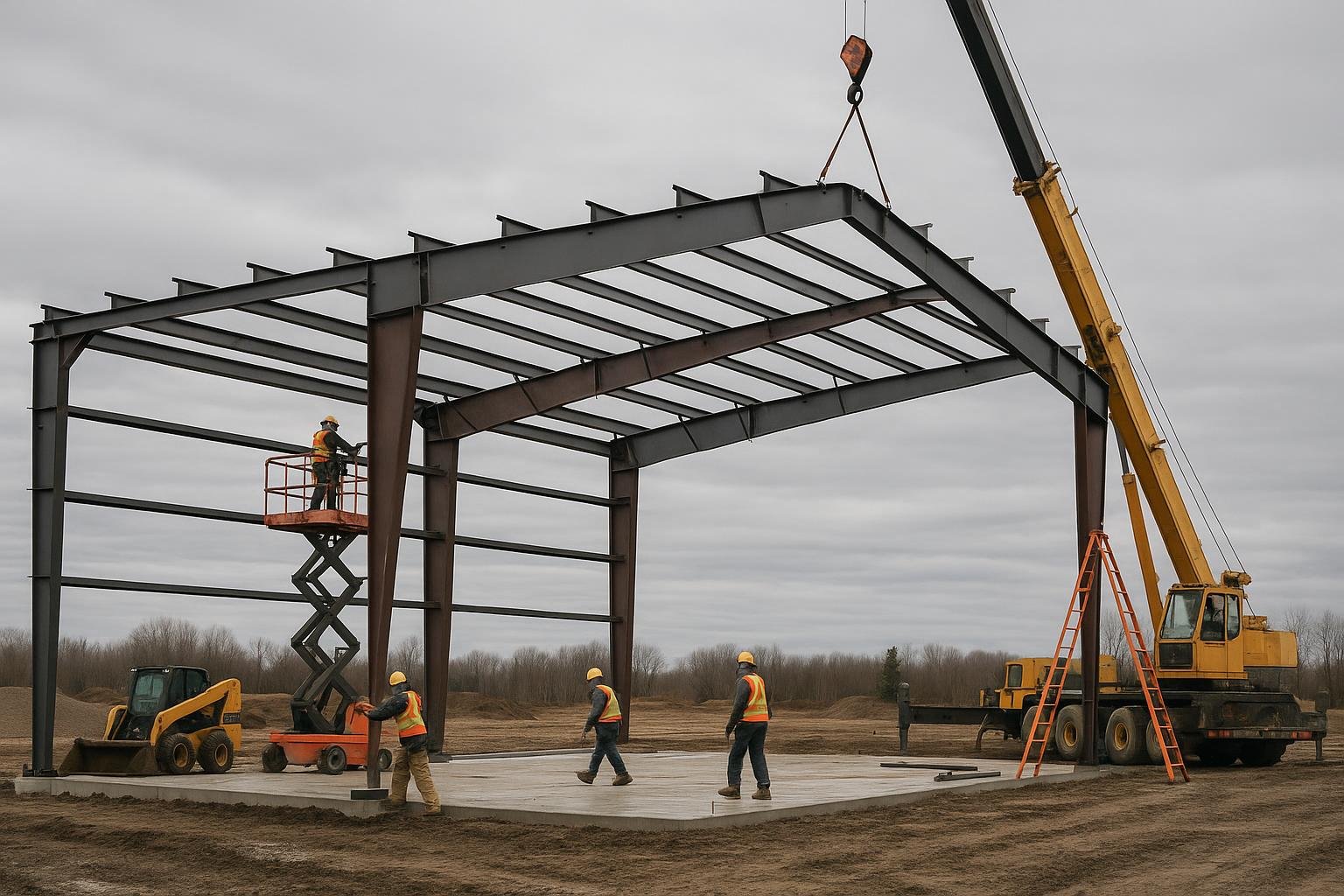
- Erect, inspect, and occupy. Erection follows the supplier’s stamped erection drawings. A final building inspection by the municipality is required before occupancy in most jurisdictions.
Frequently asked questions
What does a steel building supplier near me actually supply?
A steel building supplier near me provides the primary structural steel frames, secondary framing (purlins and girts), roof and wall cladding panels, trim, fasteners, and erection drawings as a coordinated package. Some suppliers also include insulation, doors, windows, and skylights. Foundation concrete, erection labour, and mechanical or electrical work are typically sourced separately unless you are working with a design-build contractor.
Do I need a local supplier, or can a national supplier serve my site?
A national supplier with coast-to-coast delivery capability can serve virtually any Canadian site. The critical requirement is not physical proximity but rather the ability to provide stamped engineering drawings from a professional engineer licensed in your province. Titan Steel Buildings supplies and delivers across all Canadian provinces and territories, with engineering coordinated to each site’s specific climatic and code requirements.
How do I verify that a supplier meets Canadian building code standards?
Ask the supplier to confirm in writing that their engineering packages reference the applicable edition of the National Building Code of Canada and any provincial amendments, that welding meets CSA W47.1 and CSA W59, and that stamped drawings will be provided by a licensed professional engineer in your province. You can also verify the engineer’s licence through your provincial engineering association’s public registry.
What is the difference between a pre-engineered and a prefabricated steel building?
A pre-engineered building is designed as an integrated structural system at the factory, with all components optimized to work together. A prefabricated building is a broader term covering any building whose components are manufactured off-site before assembly. All pre-engineered buildings are prefabricated, but not all prefabricated buildings are pre-engineered systems. See the Difference Between Prefab and Pre-Engineered Steel guide for a detailed comparison.
How long does it take to receive a steel building package after ordering?
For pre-engineered metal building packages in Canada, lead times from confirmed order to delivery typically range from 10 to 20 weeks, depending on the supplier’s current production schedule, the complexity of your building, and any custom engineering requirements. Simpler catalogue-size buildings fall at the lower end of that range; large custom spans or heavily accessorized packages at the upper end. Plan your procurement well ahead of your target construction start date.
Can a steel building supplier deliver to remote locations in Canada?
Most national suppliers can arrange freight to remote locations, though delivery cost and logistics complexity increase with distance from major transport corridors. Very remote sites may require specialized transport or staged delivery. Confirm freight terms, including who bears the risk of damage in transit, before finalizing your supply agreement. Titan Steel Buildings serves all Canadian provinces and coordinates delivery logistics as part of the supply process.
What building types can a steel building supplier provide?
A full-service steel building supplier can provide packages for agricultural buildings (barns, equipment storage, riding arenas), garages and workshops, commercial and retail buildings, industrial warehouses, manufacturing plants, and aircraft hangars. Titan Steel Buildings covers all of these categories. For specific building types, see pages including Agricultural Steel Buildings, Steel Warehouse Buildings, and Aircraft Hangars.
Is erection included when I buy from a steel building supplier?
Erection is not automatically included in a steel building supply package. Most suppliers provide the fabricated components and stamped erection drawings; the buyer arranges a qualified erection crew separately. Some suppliers or their dealer networks can recommend or coordinate erection contractors. Design-build contractors include erection in their contract scope. Confirm erection responsibility explicitly before signing any supply agreement.
What questions should I ask before choosing a steel building supplier?
Key questions include: Can you provide stamped engineering drawings from a licensed engineer in my province? What CSA standards does your fabrication meet? What is the current lead time for my building size? Who is responsible for erection, and can you recommend a crew? What does the warranty cover, and for how long? How are discrepancies or damaged components handled after delivery? The 2026 Buyer’s Guide to Evaluating Metal and Steel Building Suppliers in Canada provides a full checklist.
How do tariffs affect the cost of sourcing a steel building in Canada?
Steel tariffs and trade policy can affect the cost of imported steel components. Sourcing from a Canadian manufacturer or a supplier whose fabrication is done within Canada reduces tariff exposure. If a broker or online supplier is sourcing from outside Canada, confirm the tariff status of the steel and whether any cost increases will be passed to you after the order is placed. The 2026 Guide to Steel Building Costs and Tariff-Free Procurement in Canada covers this topic in detail.
If you are ready to move from research to a project-specific conversation, Titan Steel Buildings works with buyers across Canada on agricultural buildings, garages and shops, commercial and industrial warehouses, and aircraft hangars. You can request a quote or visit the Steel Building Supplier in Canada page to learn more about how Titan serves your region.