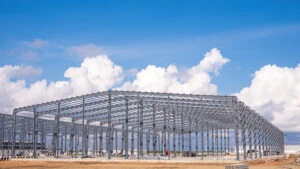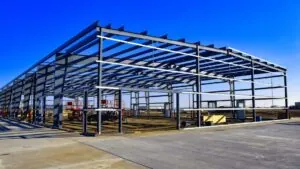
You need clear numbers and a plan if you’re budgeting a steel building in Canada for 2026. Expect steel shell packages roughly in the $24–$50 per sq. ft. range and turnkey projects commonly around $100–$180 per sq. ft., but tariffs and regional requirements can push numbers up—so lock specs early and confirm whether quotes include sitework and conditioning.
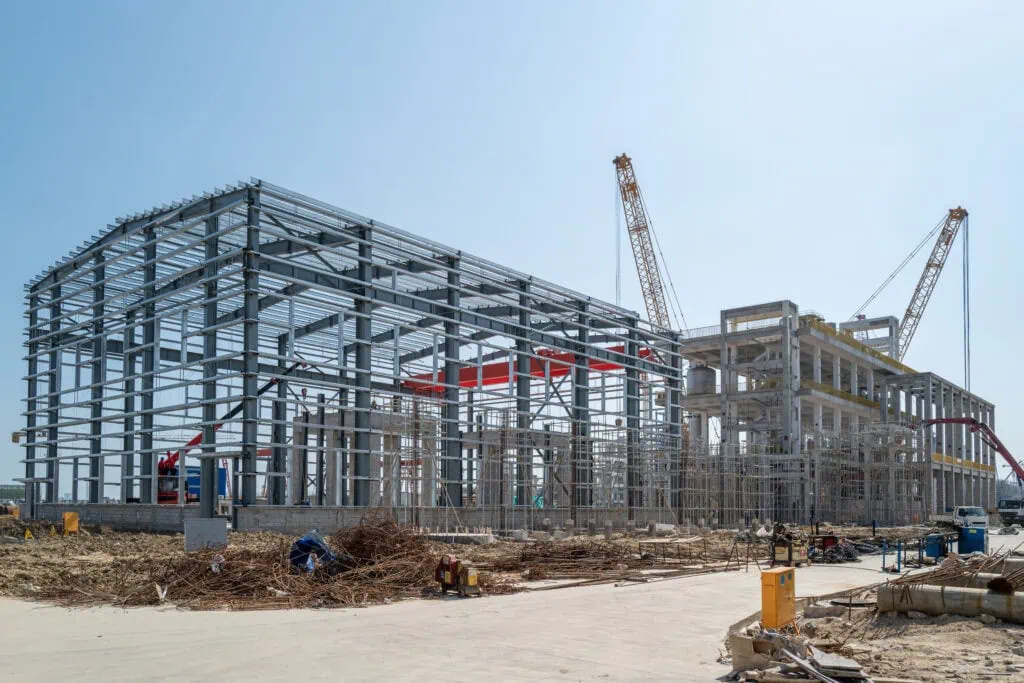
Trade policy changed in late 2025 and affects costs and sourcing. You will learn how new tariff rules and quota shifts can change supplier choices, how to spot tariff-free procurement paths, and how to weigh Canadian-made supply versus imported options for schedule and budget certainty.
Key Takeaways
- Budget with clear per-square-foot ranges and check what each quote covers.
- New trade measures make domestic sourcing and compliance more important.
- Finalize specs early to control cost, schedule, and tariff exposure.
Understanding 2026 Steel Building Costs in Canada
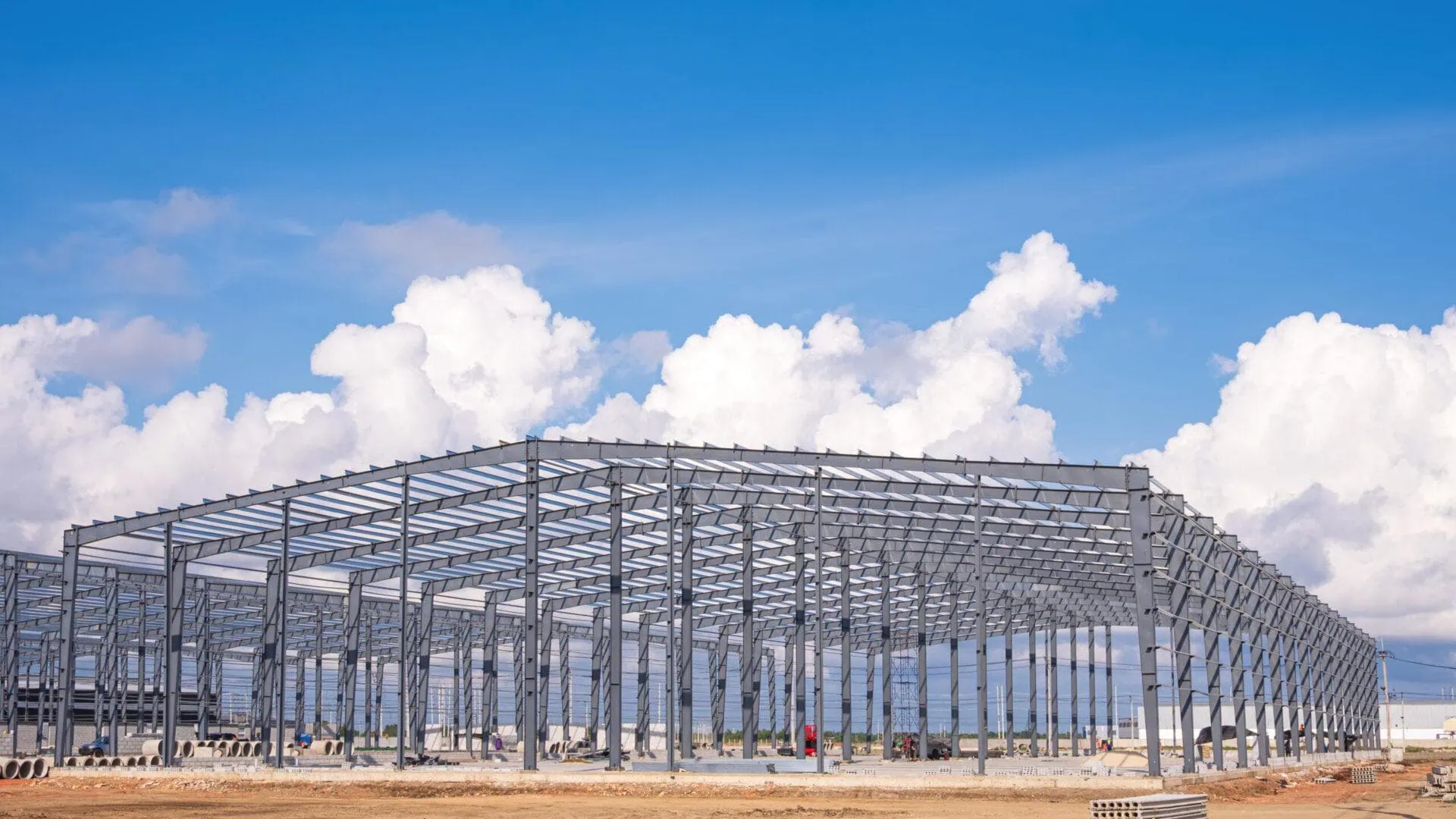
You will see price differences driven by building size, insulation needs, crane or mezzanine loads, and whether materials come from Canadian suppliers. Labour, sitework, and specific steel products like structural sections, fasteners, and prefabricated panels also shape your budget.
Key Cost Drivers in Steel Construction
Your biggest cost levers are building scale and structural demands. Larger footprints (25,000+ sq. ft.) often lower cost per sq. ft. because fixed mobilization and design fees spread out. Clear-span Steel Building designs raise steel tonnage and cost compared with columned layouts.
Mechanical and process loads matter. Overhead cranes, heavy mezzanines, and rooftop equipment add steel weight, detailing, and erection time. Insulation choice—unconditioned, intermittently heated, or fully conditioned—changes envelope cost and long-term energy bills.
Site conditions and labour affect your schedule and price. Poor soils needing piling, long freight runs, or tight erection calendars can push your budget up quickly. Fasteners, anchors, and accessories also add nontrivial line items to estimates.
New Pricing Realities Post-Tariff Changes
Tariff shifts and the move toward tariff-free procurement in Canada changed how you plan sourcing in 2026. When you choose Canadian-manufactured structural steel and prefab panels, you reduce exposure to cross-border tariff risk and customs delays. That often shortens lead times and tightens budget certainty.
Material markets stayed somewhat volatile, so lock specs early to avoid midstream cost increases. Buying domestically can still cost slightly more per unit, but it lowers logistics and compliance overhead. For projects with tight schedules, the reduced delivery risk often outweighs small price differences.
You must also track derivative-product supply like wire, fasteners, and coated panels. Tariff or supply disruptions in those markets can raise costs even if primary steel tariffs are absent. Plan procurement windows for these smaller items alongside main steel orders.
Major Steel Product Categories Impacting Projects
Structural steel (I-beams, H-sections) drives tonnage and baseline cost. Your frame type—pre-engineered metal building (PEMB) versus custom steel—changes how these members get specified and priced. PEMBs usually give lower per-sq.-ft. costs for large warehouses.
Envelope products—insulated metal panels, cladding, and roofing—affect both first cost and operating cost. Choose insulation R-value and panel type early to avoid redesigns that increase price. Prefabricated structures and wall/roof panels speed erection but require accurate lead-time planning.
Secondary items like fasteners, anchors, wire, and small-gauge components matter for installation and warranty. Cheap fasteners can cause future maintenance costs; budget for specified, corrosion-resistant hardware. Don’t forget wire for grounding and electrical runs—short lead times can delay commissioning if ordered late.
Tariff Rate Quotas and Surtaxes: What’s Changing in 2026
Canada now uses quarterly tariff rate quotas (TRQs) that limit duty-free imports of steel mill products and adds surtaxes when those limits are exceeded. You will need to track quarterly volumes, country shares, and surtax rules to avoid sudden cost increases on steel used in buildings.
New Tariff Rate Quotas Structure
The TRQs divide steel mill products into five categories: flat, long, pipe and tube, semi‑finished, and stainless steel. Each category has a quota volume based on 2024 import levels. Quotas are allocated and administered quarterly, and any unused portion can roll into the next quarter.
You must apply for import permits and monitor how much of each quarterly quota remains. Each quota also caps how much a single country can fill, so imports from one source can hit the country-share limit and trigger surtaxes for later shipments.
50% Surtax Thresholds and Application
When imports in a product category exceed the TRQ for that quarter, a 50% surtax applies on the excess volume. This surtax is charged in addition to normal customs duties and can sharply raise landed cost per tonne.
The surtax applies per product category and per quarter. You should model scenarios where one quarter’s quota is exhausted early, since additional shipments that period will face the 50% surcharge. Keep import records and quota reports ready to contest or plan around surtax exposure.
Differentiating Between FTA, Non-FTA, and CUSMA Partners
TRQ levels and timing depend on trade status. Non‑FTA countries use a baseline tied to 2024 volumes and faced TRQs starting June 27, 2025. Other FTA partners (excluding CUSMA members) had TRQs effective August 1, 2025, generally at different volume shares.
CUSMA partners (the United States and Mexico) are treated differently; they are exempt from many of these TRQ restrictions and the related 50% surtax mechanics that apply to other countries. You must know the origin and whether your goods qualify under CUSMA rules to claim tariff-free treatment. Documented proofs of origin and proper accounting under customs rules will determine whether your imports avoid surtaxes.
Navigating Steel Imports and Trade Policy Compliance
You must track permit rules, origin proofs, and new surtaxes to avoid delays and fines. Know which products hit quota cuts, which need proof of origin, and how enforcement teams monitor declarations.
Import Permit Systems and Procedures
You need to determine if the steel product falls under Canada’s Import Control List or tariff rate quotas (TRQs). For many mill steel goods, TRQs limit tariff-free volumes; non-FTA countries face tighter caps than CUSMA partners. Apply early for quota allocations or permits through the Canada Border Services Agency (CBSA) or Global Affairs processes to secure space under a TRQ.
Keep documentation organized: commercial invoices, bills of lading, and customs codes (HS). Use certified customs brokers to file Advance Rulings or tariff classification requests. Missing paperwork can trigger suspension, duties, or seizure. Monitor TRQ announcements and quota percentage changes so you can adjust purchase orders and delivery schedules.
Origin Proof and Chinese Steel Surtax Compliance
You must prove country of origin for tariff treatment and to avoid the 25% global tariff on specified steel-derivative products. Acceptable proofs include certificates of origin, supplier declarations, and manufacturing records showing where steel was melted and poured or aluminum was smelted and cast.
If your imports contain steel melted and poured in China, expect extra scrutiny and potential surtaxes. Keep mill test reports and supply-chain traceability showing where raw metal processing occurred. Use a simple checklist:
- Certificate of origin (signed)
- Mill test reports
- Supplier process statements
- Bills of materials showing melt/cast locations Without this, your shipment may lose preferential tariff treatment and face the surtax or higher duty.
Enforcement and Monitoring Mechanisms
CBSA recently set up specialized steel trade teams and market watch units to spot misdeclaration and trade diversion. These teams review normal values, audit importers, and process tips through online portals. Expect targeted reviews if you import large volumes or sudden shifts in sourcing.
Prepare for on-site audits and documentary requests. Maintain one clear file per shipment for at least five years to meet audit timelines. Use internal compliance checks and third-party verifications to reduce risk. When officials flag discrepancies, act quickly: provide corrective filings, support with documentation, and consult legal counsel for appeals or mitigation.
Maximizing Tariff-Free Procurement Opportunities
You can lower costs and reduce delays by buying steel that meets Canadian sourcing rules, using domestic procurement policies, and checking for sector-specific exemptions. Focus on verified Canadian suppliers, follow procurement rules that favor local content, and document any carve-outs for health, safety, or national security.
Sourcing from Canadian Steel Producers
Buy directly from mills and fabricators that operate in Canada to avoid the new surtax and reduced TRQs on many imported steel products. Look for suppliers who are members of industry groups like the Canadian Steel Producers Association; membership often signals local production and traceable supply chains.
Ask suppliers for mill certificates, country-of-origin statements, and bills of lading that show Canadian manufacture. Keep these documents with your procurement file to prove tariff-free eligibility during audits.
Assess capacity and lead times up front. Canadian mills may prioritize domestic projects, so lock in contracts early and include delivery windows and penalties for delays. Consider regional producers to cut transport costs and benefit from federal or provincial support programs aimed at strengthening the Canadian steel sector.
Utilizing Domestic Procurement Policies
Use Canada’s federal and provincial procurement rules to favor Canadian-made steel in public and private projects. Include clear domestic content clauses in tender documents and require proof of Canadian manufacture at bid submission.
Design scoring frameworks that award points for Canadian origin and for using certified members of Canadian steel industry bodies.
Leverage government programs that support Canadian steel, such as grants or procurement set-asides for critical sectors. Work with your legal or compliance team to align contracts with CUSMA and new tariff rules so you don’t accidentally trigger duties. Track compliance through a centralized supplier registry and periodic audits.
Exemptions and Carve-Outs for Strategic Sectors
Identify exemptions that can keep certain imports tariff-free, like goods used for public health, national security, or critical infrastructure. The government extended temporary tariff remissions for some health and agricultural uses; confirm current dates and eligible product lists before relying on them.
Request product-specific remissions or apply for tariff relief when your item meets a carve-out. Prepare technical justifications, end-use declarations, and procurement records to support applications.
If your project serves health care, public safety, or critical transportation, engage early with procurement officials and the Department of Finance or relevant ministries. They can confirm eligibility and speed approvals. Keep close communication with Canadian Steel Producers Association members to find compliant alternatives when exemptions don’t apply.
Supporting the Canadian Steel Industry and Workforce
The government is funding innovation, training, and targeted regional supports to keep plants open, retrain workers, and help firms shift to domestic markets. Expect grants and loans for new equipment, wage-topups for work-sharing, and region-specific assistance to ease tariff impacts.
Strategic Innovation Fund Initiatives
You can access Strategic Innovation Fund (SIF) support for plant upgrades that cut emissions and raise productivity. The SIF offers repayable and non-repayable contributions for projects that add value to Canadian steel — for example, new electric-arc furnaces, automation lines, or pilot facilities for advanced steel products.
Applications typically require a business case showing job retention or creation, carbon reductions, and potential export sales. Funding often pairs with other programs, such as provincial loans or federal tariff-response money, to lower your capital cost and speed project timelines.
Labour Market Development Agreements for Skilled Workers
You can get training support through Labour Market Development Agreements (LMDAs) delivered by provinces and territories. LMDAs fund targeted skills training, apprenticeships, and reskilling programs for steel workers displaced by market shifts.
Programs can cover classroom training, on-the-job placements, and certification costs. They work alongside federal measures like EI Work-Sharing top-ups to keep experienced staff employed while they retrain. Contact your provincial employment centre to start an LMDA-funded training plan tailored to mill or fabrication shop roles.
Pivot to Grow and Regional Tariff Response Solutions
Pivot to Grow grants help firms diversify products and find new markets so you can reduce reliance on U.S. exports. These grants fund market research, retooling, and product development aimed at selling into Canadian supply chains or non-U.S. markets.
The Regional Tariff Response Initiative supplies targeted relief to communities hit hardest by tariffs. It can include liquidity assistance, local procurement support, and supply-chain mapping to redirect demand to nearby mills. Combining Pivot to Grow with regional tariff funds can lower your transition risk and protect jobs while you shift production.
Financing and Risk Mitigation for Large Enterprises
You need clear funding paths and practical steps to limit cost shocks from tariffs, price swings, and global overcapacity. The following explains how to tap loan support, cut direct costs, and read short-term market signals to protect large steel projects.
Accessing the Large Enterprise Tariff Loan Facility
If your firm faces sudden tariff costs, the large enterprise tariff loan facility can provide short-term cash flow support. Apply with audited financials, a detailed tariff exposure schedule, and a repayment plan showing how tariff-free procurement or price pass-through will cover the loan.
Lenders will look for credit history, collateral (often receivables or project assets), and evidence of supplier contracts that justify the loan size. Interest rates and term lengths vary; negotiate for fixed-rate periods to limit exposure if the Bank of Canada changes rates.
Document expected tariff relief steps—such as supplier requalification for tariff-free origin—to speed approval. Keep legal counsel close to ensure loan covenants do not restrict procurement flexibility during project execution.
Cost Mitigation Strategies Amid Global Overcapacity
Global overcapacity pressures steel prices and delivery times. You should diversify suppliers across regions with stable output and prioritize suppliers that show clear capacity plans. Use quantity surveyors to track material forecasts and lock in prices with staged purchase orders to limit cost creep.
Negotiate clauses that share overcapacity risk—like price-adjustment bands tied to a published benchmark—and seek supplier discounts for volume or early payment. Consider small, strategic inventories to buffer supply delays without overstocking.
Hedging instruments, such as futures or options on raw materials, can cap input costs but add complexity. Use them selectively for major inputs and match hedge durations to contract timelines.
Outlook for Market Stability and Sector Growth
Expect volatility to ease if demand growth matches capacity or if major producers cut output. Monitor capacity announcements from major exporters and domestic policy shifts that affect tariff treatment. Mark Carney–style macro signals, like central bank guidance on inflation and rates, will affect financing costs and investor appetite for infrastructure deals.
You should model scenarios with varying price and rate paths to stress-test project viability. Plan for two to three years of higher financing costs by securing longer-term fixed-rate financing when possible. Keep stakeholder updates frequent; lenders and investors favor transparency on procurement and mitigation actions.
For more information on all types of steel buildings visit our home page at: Titan Steel Buildings
Frequently Asked Questions
This section answers how steel prices, tariffs, and procurement rules affect your project costs and supply options. It gives clear steps you can take to buy steel, avoid extra duties, and meet import rules for Canadian construction.
What are the current market factors influencing steel building costs in Canada?
Global steel mill capacity, energy prices, and freight costs drive raw material and fabrication prices. Demand from public infrastructure projects and construction also pushes prices up or down locally.
Domestic policy changes, like quota limits and surtaxes, change import supply and can raise costs for certain products. Currency shifts between the Canadian dollar and trading partners also affect your landed price.
How can Canadian businesses navigate international tariffs when procuring steel for construction?
Check product classifications and origin rules before you buy to see if shipments fall under tariff-rate quotas or surtaxes. Ask suppliers for mill certificates and origin documents to support tariff-free claims.
Use Canadian suppliers or CUSMA (U.S./Mexico) sources when possible, since many new TRQs and surtaxes exclude those partners. Consider bonded warehousing or staged shipments to align with quarterly TRQ openings.
What strategies are effective for reducing overall expenses in steel building projects?
Buy standard sizes and common gauges to lower fabrication and lead times. Consolidate orders and negotiate longer-term contracts to lock prices and reduce per-unit transport costs.
Plan design choices to reduce welded or custom steel work. Work with fabricators early to value-engineer connections and member sizes for easier fabrication and on-site assembly.
Which are the regulatory compliance considerations for steel imports in the Canadian construction industry?
Ensure customs declarations match the tariff classification and origin stated on shipping documents. Track TRQ permits, surtax orders, and any entry conditions tied to the Steel Derivative Goods Surtax Order.
Meet procurement rules for public-funded projects that may require Canadian steel content. Keep audit-ready records of invoices, bills of lading, and mill test reports.
In what ways has recent legislation impacted steel pricing and availability for Canadian builders?
The government introduced tariff-rate quotas, origin-based surtaxes, and procurement preferences in 2025–2026. These measures reduced available import volumes from many countries and raised costs on some derivative products.
Public procurement rules that favor Canadian steel have shifted demand toward domestic mills, which can tighten supply and raise lead times for certain shapes and grades.
What are the recommended practices for securing high-quality steel without tariffs for building construction?
Source from Canadian mills or CUSMA-partner suppliers with verified origin documentation. Require mill test reports, traceability, and third-party inspection where quality is critical.
Time purchases around TRQ windows if you must import from quota countries, and work with customs brokers to confirm permit eligibility and avoid unexpected surtaxes.