Insulation is what helps keep the inside of your steel building comfortable, no matter the weather outside. It does this by slowing the transfer of heat so that it is warm in the winter and cool in the summer.
At Titan Steel Buildings, we help you select the proper insulation for your building type, climate, and budget, ensuring energy efficiency, comfort, and long-lasting protection.

Fibreglass rolls or batts are a popular, budget-friendly pick
Rigid foam panels give strong insulation without using much space
Spray foam expands into every nook and cranny for a tight seal
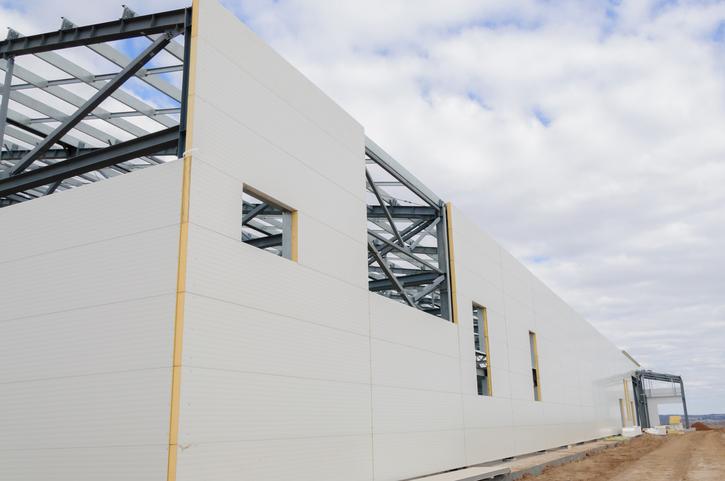
Insulated metal panels combine metal and foam for top-notch performance
Fabric liners work great for agriculture or commercial buildings
At Titan Steel Buildings, we know insulation is key to comfort and savings. Our experts work with you to pick and install the proper insulation for your building’s needs and budget.
Don’t wait to make your steel building more energy-efficient and comfortable. Contact us today to get started with insulation that lasts and keeps you protected year-round.
Yes — steel buildings can be fully insulated, and in Canada they should be. Insulation controls condensation, cuts heating and cooling costs, and makes the space comfortable year-round. Titan specifies and supplies insulation matched to your building’s use and provincial climate, from a basic shop to a fully conditioned warehouse or office.
A steel building is insulated by installing an insulation system between or over the framing and behind the wall and roof panels, always paired with a vapour barrier to stop condensation. Common systems include fiberglass blanket (batt), rigid board, spray foam, and reflective barriers, chosen for the target R-value and how the space is used.
The main options are fiberglass blanket (batt) with a facing, rigid board, closed-cell spray foam, and reflective or radiant barriers. Fiberglass is the most common and cost-effective for large spans, spray foam gives the highest R-value per inch and an air seal, and reflective barriers help with radiant heat. Titan matches the system to your budget and climate.
The R-value a steel building needs depends on your province’s energy code and how the space is heated. A conditioned building in a cold Canadian climate targets higher wall and roof R-values than an unheated storage shell. Titan specifies insulation to meet the applicable code and your comfort and energy goals.
A steel building needs a vapour barrier because warm interior air meeting cold steel causes condensation, which leads to dripping, rust, and wet insulation. A properly installed vapour barrier keeps moisture out of the assembly, protecting the structure and keeping insulation effective. It is a critical part of any Canadian steel building envelope.
Yes — a correctly designed insulation and vapour-barrier system is the primary defence against condensation in a steel building. It keeps interior surfaces above the dew point and blocks humid air from reaching cold steel, preventing the dripping and rust that affect uninsulated buildings in Canada’s climate.
The best insulation depends on the building’s use: fiberglass blanket is the most cost-effective for large heated or semi-heated spaces, closed-cell spray foam is best where maximum R-value and an air seal matter, and reflective barriers suit cutting radiant heat in milder uses. Titan recommends the right system for your climate and budget.
Yes. Insulation can be retrofitted to an existing steel building, though it is easier and cheaper to install during construction before the panels close in the walls and roof. For retrofits, spray foam and rigid board are common because they apply to the inside face. Titan can advise on the best retrofit approach.
Insulation cost depends on the building size, target R-value, and system — fiberglass blanket is the most economical, while spray foam costs more but delivers higher performance. Because it is priced by area and specification, insulation is quoted with your building. Titan includes it in your package so the envelope is engineered as one system.
Yes — insulation is the single biggest factor in a steel building’s energy efficiency. It reduces heat loss in winter and heat gain in summer, lowering heating and cooling costs and keeping temperatures stable. Paired with a tight vapour barrier and quality doors, insulation turns a bare shell into an efficient, comfortable building.
Yes. With the right insulation system and mechanical equipment, a steel building can be heated, cooled, and humidity-controlled for year-round or climate-controlled operation — offices, warehouses, workshops, or cold storage. Titan specifies the envelope and R-values needed to hold your target interior conditions in any Canadian climate.
Titan specifies and supplies insulation matched to your steel building and provincial climate, and can coordinate its installation as part of a fuller package. Because the insulation, vapour barrier, and panels are engineered together, the envelope performs as one system rather than parts sourced separately.