A Comprehensive Guide for Industrial, Commercial, and Large-Scale Estate Projects (5,000+ Sq. Ft.)
If you are expanding a business, developing industrial land, or building a large-scale agricultural facility in Canada, pre-engineered metal buildings (PEMB) offer the highest ROI in the current construction market. However, building in the Canadian climate requires navigating specific variables: shifting steel costs, strict National Building Code (NBC) requirements, and complex site preparation.
This guide provides developers, business owners, and estate managers with the exact data needed to budget and plan a large-scale steel structure in 2026.
Part 1: 2026 Cost Expectations & Variables
While raw steel prices have stabilized compared to previous years, your final cost is dictated by location, engineering loads, and scale. In steel construction, economies of scale play a massive role.
Estimated 2026 Price Per Square Foot (Building Shell Only)
| Building Size | Ideal Application | Estimated Cost Range (CAD)* | Efficiency Rating |
| 2,500 – 4,900 sq. ft. | Large Private Shops, Small Flex Space | $28 – $45 / sq. ft. | Good |
| 5,000 – 10,000 sq. ft. | Mid-Size Manufacturing, Fleet Garages | $24 – $38 / sq. ft. | Excellent |
| 10,000 – 50,000+ sq. ft. | Warehousing, Aviation Hangars, Logistics | $18 – $30 / sq. ft. | Superior (Best ROI) |
(Disclaimer: Prices are estimates for the engineered structural steel, roof, and wall cladding only. Costs do not include concrete, site prep, insulation, or erection labor. High snow/seismic load zones will impact final steel tonnage).
The 3 Hidden Cost Drivers in Canada
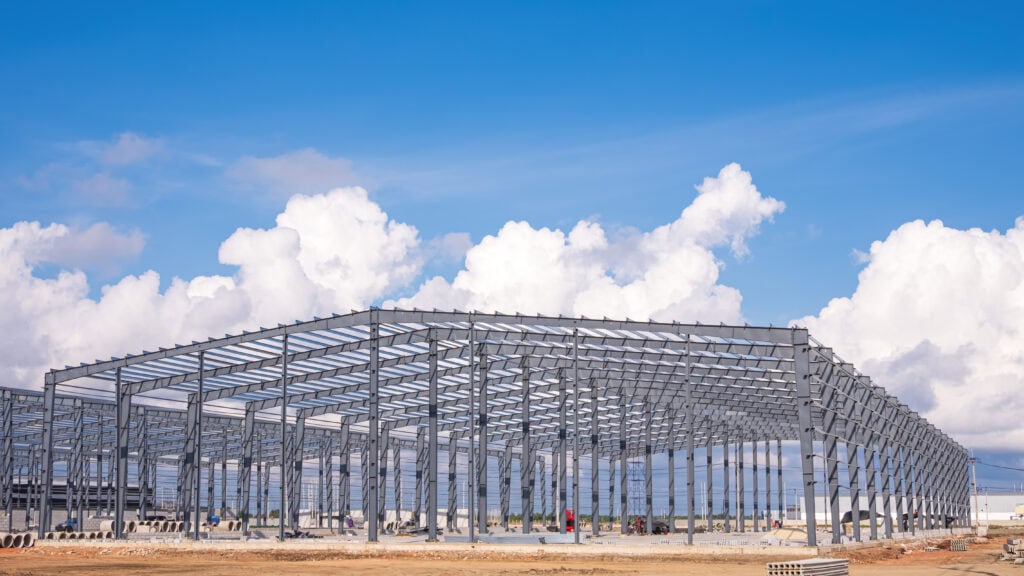
- Snow Load & Tonnage: A 10,000 sq. ft. warehouse in Southern Ontario requires less steel tonnage than the exact same building in Northern Quebec or the Rocky Mountains. Higher snow loads require thicker red-iron mainframes.
- Clear-Span Requirements: A “Clear-Span” Steel building (no interior columns) is perfect for aircraft hangars and riding arenas, but a width over 150 feet requires heavier steel. Adding a single row of interior columns (Multi-Span) can reduce your structural cost by up to 15%.
- Crane Readiness: If your manufacturing facility requires overhead bridge cranes (5-ton to 20-ton), the building must be engineered to support dynamic loads. Retrofitting is expensive; engineering for it upfront is cost-effective.
| Cost Factor (Over 20 Years) | Wood Frame Construction | Titan Pre-Engineered Steel Buildings | The Steel Advantage |
| Initial Construction (Shell) | $400,000 | $250,000 | $150,000 Savings |
| Maintenance & Repairs (20 Yrs) | $140,000 (Rot, pests, painting) | $25,000 (Occasional washing) | $115,000 Savings |
| Commercial Insurance (20 Yrs) | $80,000 (Combustible) | $55,000 (Non-combustible) | $25,000 Savings |
| Estimated Energy Costs (20 Yrs) | $60,000 | $45,000 (Better thermal seal) | $15,000 Savings |
| Total 20-Year Ownership Cost | $680,000 | $375,000 | $305,000 Total Saved |
Part 2: The Canadian Construction Timeline
Time is money. Pre-engineered steel buildings erect 30% to 40% faster than traditional concrete or timber structures. Here is what your project timeline looks like:
The 5-Step Project Schedule
- Phase 1: Design & Engineering (2 – 4 Weeks) We design the building to your exact specifications. Stamped engineered drawings are generated, calibrated to your specific municipality’s climatic data.
- Phase 2: Permitting (4 – 12+ Weeks) You submit the stamped drawings to your local building authority. (Pro Tip: Rural agricultural permits are often faster than urban commercial permits).
- Phase 3: Fabrication & Manufacturing (8 – 12 Weeks) Once permits are approved and the design is locked, your steel is cut, welded, drilled, and painted at the factory.
- Phase 4: Site Prep & Foundation (Concurrent with Phase 3) While your building is being manufactured, your local concrete contractor pours the foundation and sets the critical anchor bolts.
- Phase 5: Delivery & Erection (2 – 6 Weeks) The building arrives on flatbed trucks. Because the steel is pre-cut and pre-drilled, assembly is rapid. A 10,000 sq. ft. shell can often be erected and weather-tight in under a month.

Part 3: Geographic Engineering (Building for Your Province)
Canada’s geography dictates your building’s engineering. Titan Steel Buildings provides localized engineering stamps for all provinces and territories.
- British Columbia (The Seismic Zone): Buildings in the Lower Mainland and Vancouver Island require strict seismic engineering. Our rigid-frame designs flex safely during tectonic events, ensuring full compliance with Cascadia subduction zone requirements.
- The Prairies (The Wind Zone): Alberta, Saskatchewan, and Manitoba experience massive wind sheer. Agricultural and oilfield structures here feature heavy-duty cross-bracing and specialized fasteners to prevent uplift.
- Ontario & Quebec (The Snow & Ice Zone): From the GTA to Northern mining districts, heavy, wet snow is the primary threat. We engineer roof pitches and purlin spacing to handle loads exceeding 80 psf, preventing roof collapse and managing ice damming.
- Atlantic Canada (The Salt & Corrosion Zone): High winds and salt air degrade standard materials. We utilize premium Galvalume roof panels and specialized wall coatings to prevent rust and extend the lifespan of coastal commercial buildings.
Part 4: Site Prep & Foundation Requirements
The most common point of failure in a steel building project is poor communication between the steel supplier and the concrete contractor.
The Anchor Bolt Plan
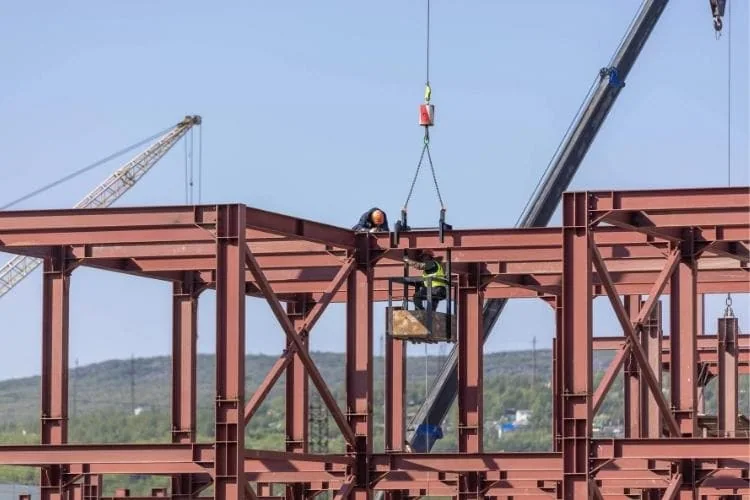
Unlike wood construction, pre-engineered steel requires absolute precision. The red-iron columns must bolt exactly onto anchor bolts embedded in the concrete.
- Titan Steel Buildings provides a certified Anchor Bolt Plan.
- Your concrete contractor must use this plan to set the bolts before the concrete cures.
Foundation Types for Large-Scale Buildings
- Pier & Grade Beam: The most common for large industrial warehouses. Heavy concrete piers are poured directly under the main steel column locations to carry the structural load, connected by a perimeter grade beam.
- Floating Slab / Monolithic Pour: Common for medium-sized workshops and garages (5,000 sq. ft.). The floor and footings are poured at the same time.
Part 5: Frequently Asked Questions (FAQ)
Are steel buildings energy efficient in Canadian winters? Yes. When paired with high-performance insulation systems, steel buildings are highly energy-efficient. Our structural framing accommodates thick R-value insulation without compromising interior space, easily meeting SB-10 energy requirements in Ontario and equivalent codes nationwide.
Can a steel building be expanded later? Absolutely. One of the greatest advantages of a pre-engineered steel building is scalability. By designing your building with “expandable endwalls,” you can simply remove the wall cladding, bolt on new structural frames, and seamlessly extend the length of your warehouse as your business grows.
Do you build residential homes? Titan Steel Buildings specializes in large-scale structural projects, commercial warehousing, agricultural facilities, and large private estate workshops (typically 5,000 sq. ft. and up). We do not manufacture small residential garden sheds or standard single-car garages.
How much does a 5,000 to 10,000 sq. ft. steel warehouse cost in Canada? The structural steel shell for a mid-to-large-size warehouse typically ranges from $22 to $32 CAD per square foot (as of 2026 data). Final costs depend heavily on the required steel tonnage dictated by your local snow, wind, and seismic loads. This estimate covers the red-iron framing, roof panels, and wall cladding, but excludes concrete, insulation, and erection labor.
Are pre-engineered steel buildings cheaper than wood or concrete? Yes, for large-scale projects. While the upfront material cost of steel may be higher than wood for small structures, steel becomes the most cost-effective solution for buildings over 5,000 sq. ft. You save significantly on labor (assembly is 30-40% faster), foundation costs (fewer columns mean fewer piers), and long-term maintenance.
Are commercial steel buildings cheaper to insure? Yes. Steel is a non-combustible material (Class A fire rating). Commercial and agricultural insurance premiums for pre-engineered steel buildings are routinely lower than those for wood-frame structures because they are highly resistant to fire, pests, and rot.
Climate & Insulation (Canadian Specifics)
How do you insulate a steel building for Canadian winters? Steel buildings are naturally highly energy-efficient when insulated correctly. We utilize premium insulation packages—such as fiberglass blanket insulation with a vapor barrier or insulated metal panels (IMPs)—to achieve R-values of R-20 for walls and R-40 for roofs. This easily meets provincial energy codes like Ontario’s SB-10 and prevents interior condensation.
Will a metal building rust in places like Atlantic Canada? No, provided it is treated correctly. For high-moisture or salt-air environments, we use premium Galvalume Plus™ steel for roofing and wall panels, which offers superior corrosion resistance compared to standard galvanized steel. Red-iron mainframes are also factory-painted with rust-inhibiting primers.
How do you engineer a building for heavy snow loads in Northern Canada? We do not use generic kits. Every Titan Steel Building is custom-engineered to meet or exceed the specific ground snow load requirements of your exact municipality. In high-snow areas (like Northern Ontario or Quebec), we engineer the roof pitch, purlin spacing, and mainframe steel thickness to safely bear extreme weights without risk of roof collapse.
Construction & Permitting
What type of foundation is required for a commercial steel building? Pre-engineered steel buildings require a precisely engineered concrete foundation. For large commercial or industrial buildings, the most common type is a pier and grade beam foundation. The steel columns are bolted directly to anchor bolts embedded in the concrete piers. We provide the certified anchor bolt plans required by your concrete contractor.
Do Titan Steel Buildings come with engineered stamped drawings for my municipality? Yes. Every building package includes detailed architectural and structural drawings stamped by a professional engineer (P.Eng) licensed in your specific province or territory. These documents are essential for fast-tracking your municipal building permit.
How long does it take to manufacture and erect a steel building? Timelines vary by complexity, but generally, manufacturing takes 8 to 12 weeks from the time engineered drawings are approved. Once delivered, erection is incredibly fast. Because components are factory-cut, welded, and pre-drilled, a professional crew can often erect a 10,000 sq. ft. building shell in 3 to 6 weeks.
Customization & Building Use
What is a “clear-span” steel building, and why do I need one? A clear-span building is engineered so that the entire roof load is supported by the exterior walls, meaning there are zero interior support columns. This is vital for aircraft hangars, riding arenas, and industrial warehouses where unhindered maneuverability for forklifts or heavy machinery is required. We can engineer clear spans up to 200 feet wide.
Can I customize the exterior of a steel building with brick, stone, or stucco? Absolutely. Pre-engineered steel frames can be designed to support various facade materials. Many of our commercial retail clients use brick veneer, stone wainscoting, glass curtain walls, or stucco over the steel framing to meet strict commercial zoning aesthetics while maintaining the strength of a steel core.
Can you engineer buildings to support overhead bridge cranes? Yes. A pre-engineered steel building is the most cost-effective structure for supporting heavy dynamic loads. We can engineer the structural columns and crane brackets (runway beams) to safely support 5-ton, 10-ton, or heavier overhead bridge cranes directly from the primary framing.
Do you build steel barndominiums or residential homes? Titan Steel Buildings specializes in large-scale structural projects, including agricultural complexes, commercial warehousing, and large private estate workshops (typically 5,000 sq. ft. and up). While our structural shells can be used for massive estate builds or barndominiums, we do not manufacture or supply small-scale residential housing or standard backyard garages.
Ready to Scale Your Operations?
Stop dealing with the maintenance, high insurance costs, and limitations of traditional construction. If you have land and are ready to develop a commercial, industrial, or large agricultural facility, Titan Steel Buildings is your national partner.
Contact our estimating team today for a structural assessment and precise cost analysis.
Call Us: +1-800-711-5107 Submit Your Project Details: https://titansteelbuildings.ca/request-steel-building-quote/ Visit our home page her for more information on: Industrial steel warehouses