You need a quick way to tell prefab and pre‑engineered steel buildings apart so you can pick the right option for your project. Prefab parts arrive in modules that fit together with little on‑site work, while pre‑engineered buildings come as factory‑designed steel systems made to exact engineering specs and assembled on site for larger spans and more performance control. Prefab gives faster, simpler assembly and lower up‑front cost for basic needs, while pre‑engineered steel offers greater customization, engineered performance, and easier expansion.

If you want speed and simplicity for a small to medium build, prefab often wins; if you need long spans, strict codes, or future growth, pre‑engineered steel usually makes more sense. Keep reading to see side‑by‑side differences, performance trade‑offs, and which choice fits common uses like workshops, warehouses, or commercial spaces.
Key Takeaways
- Prefab focuses on fast, modular assembly for simpler projects.
- Pre‑engineered steel offers engineered specs and stronger performance for larger or code‑sensitive builds.
- Choose based on project size, future expansion needs, and regulatory requirements.
Understanding Prefab and Pre-Engineered Steel: Definitions and Core Concepts
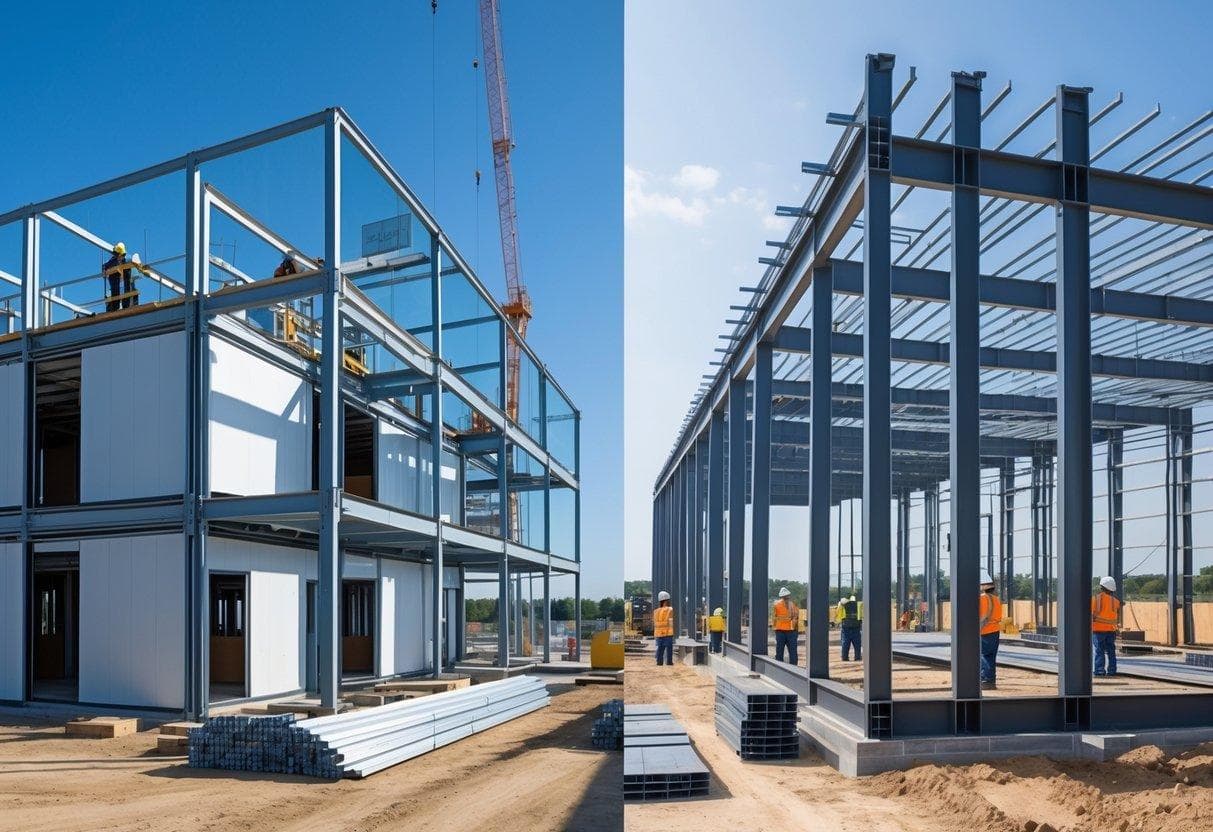
You will learn what each system means, how they differ in design and assembly, and when one fits your project better. The next parts define the terms and show their relationship to help you pick the right option.
What Is a Prefabricated Building?
A prefabricated building, or prefab, uses factory-made components that are manufactured off-site and then assembled on your property. Components can range from panels and wall sections to full modules that arrive nearly complete.
Prefab systems often use standardised parts to cut production time and cost. You can choose from kit-style metal buildings, modular units, or panelised systems. This makes prefab a good choice when you want faster delivery and predictable pricing.
Prefab buildings may not be engineered specifically for unique site loads or climates unless the manufacturer customises the design. You should check whether the prefab package meets local building codes and whether on-site work like foundations and connections will need local engineering.
What Is a Pre-Engineered Steel Building?

A pre-engineered steel building (PEB) is engineered and fabricated to the exact loads, codes, and conditions of your project before production. The supplier designs the main frames, purlins, and bracing to match your site, roof loads, snow, wind, and any special clearances.
PEBs deliver tailored steel members and connection details. They reduce on-site cutting and welding because each part fits the engineered design. This makes PEBs useful for industrial warehouses, commercial shops, and buildings needing long clear spans or specific load capacity.
You still get factory-made components, but the key difference is custom engineering. Always review the supplier’s stamped drawings and confirm local permit requirements and erection tolerances before purchase.
How Prefab and Pre-Engineered Buildings Relate
Both prefab and pre-engineered buildings use off-site fabrication to speed construction and improve quality control. They share benefits like reduced site labour and shorter schedules compared to fully site-built steel structures.
The main difference lies in design intent: prefab tends toward standardised, repeatable kits; pre-engineered steel buildings are custom-calculated for your building’s loads and codes. In practice, PEBs are a subset of prefabrication when their components are factory-made.
When you choose, weigh cost, schedule, and performance. Pick prefab kits for simple, budget-conscious projects with standard requirements. Choose a PEB when you need engineered solutions for specific spans, loads, or regulatory compliance.
Key Differences Between Prefab and Pre-Engineered Steel
You will see differences in how parts are made, how the design is set up, and how far the building can span. These affect cost, speed, and how much you can change the building later.
Manufacturing and Construction Methods
Prefab buildings use factory-made components that arrive mostly ready to bolt or snap together on site. You get panels, frames, and sometimes whole wall or roof sections that speed up erection. This lowers site labour and shortens schedules.
Pre-engineered metal buildings (PEMBs) are also factory-fabricated, but each primary frame is cut and shaped to match structural calculations for your project. The manufacturer supplies custom-cut rafters, columns, and connections designed for specific loads and codes. You still assemble on site, but pieces are tailored for performance rather than only standard fit.
Both methods reduce on-site fabrication. Prefab leans more on standardized modules; pre-engineered focuses on engineering to meet prescribed loads and codes.
Design Approach and Customization
With prefabricated metal buildings, you choose from set models and options. You can change finishes, doors, and window layouts, but major frame geometry stays standard. This makes pricing predictable and design times short.
Pre-engineered buildings begin with engineering: you submit loads, roof pitch, snow and wind data, and code requirements. The supplier runs structural optimization and produces drawings and custom shop drawings. You can request non-standard clearances, larger doors, or integration with cranes because the frames are engineered for those changes.
If you need rapid, lower-cost options, prefab fits. If you need bespoke structural performance or code compliance for unusual conditions, pre-engineered gives you the engineered solution.
Structural System and Span Capability
Prefab systems often use repetitive, standard frames that work well for small to medium spans. They rely on modular panels and simpler connections, which suits warehouses, small workshops, and storage buildings.
Pre-engineered metal buildings use engineered primary members sized for longer spans and larger loads. The structural system includes moment connections, tapered rafters, and web stiffeners to control deflection and meet calculations for snow, wind, and crane loads. This lets you achieve wider clear spans and higher clearances without interior columns.
Choose prefab for routine spans and fast build. Choose pre-engineered when you need larger clear spans, precise structural performance, or integration with heavy equipment.
Building Performance and Compliance
This section explains how design choices affect strength, code approval, and factory checks for steel structures. You will learn what matters most for long-term performance and legal compliance.
Structural Integrity and Material Efficiency
You must check how the steel building frames handle loads like snow, wind, and equipment. Pre‑engineered steel buildings use custom‑sized members engineered by a structural engineer to match site loads, so you often get longer clear spans with less steel weight. Prefab metal buildings tend to use standardized parts; they can be efficient for small spans but may require heavier members or extra bracing for the same performance.
Think about connections and tolerances. Shop‑cut, factory‑welded connections in pre‑engineered systems often produce tighter fits than field‑bolted prefab parts. That reduces on‑site adjustment time and improves load paths through the structure. Also compare coatings and gauge of steel; corrosion protection and member size directly affect lifespan and maintenance costs.
Building Codes and Certification
You need assurance the steel structure meets local building codes where you build. Pre‑engineered buildings are usually engineered to specific codes and include stamped drawings from a licensed structural engineer for your jurisdiction. That simplifies permitting with municipal building officials and ensures compliance with wind, seismic, and snow load requirements.
Prefabricated systems may not carry project‑specific engineering by default. If local building codes demand site‑specific calculations or stamped seals, you must request additional engineering. Always confirm certificate of compliance, design wind speed, and snow load values before permit submission to avoid delays with local building departments.
Quality Control and Documentation
You should require a clear trail of quality records before construction starts. Pre‑engineered suppliers typically maintain factory quality control programs, mill test reports, weld inspection records, and as‑built drawings. Those documents let you confirm material grades, coating thickness, and fabrication tolerances for the metal building.
Prefabricated suppliers vary widely in documentation. Ask for shop drawings, material certificates, and inspection reports up front. During erection, track field inspection reports and any change orders so your structural engineer can verify that alterations do not compromise the steel building’s performance.
Applications and Typical Use Cases
You will find strong differences in where prefab and pre-engineered steel work best. One suits large, engineered spans and heavy-duty use; the other suits fast, repeatable builds and smaller-scale or modular needs.
Industrial and Commercial Buildings
Pre-engineered steel shines for manufacturing plants, warehouses, and large industrial buildings. Its engineered frames handle long clear spans for assembly lines, cranes, and racking systems. You get predictable load capacity, easy integration of mezzanines, and durable roof systems for heavy equipment and high bay lighting.
Prefabricated metal panels and components do appear in commercial settings too, but they often fit secondary roles such as cladding, small retail kiosks, or sheds. Cold storage facilities use insulated prefab panels for tight thermal control, while the structural frame is usually pre-engineered steel to meet load and deflection requirements.
You can specify bracing, roof pitch, and door/portal locations up front. That makes pre-engineered systems a common choice when you need certified engineering, long spans, and low life-cycle cost.
Residential and Modular Homes
Prefab construction dominates modular homes and small residential projects you want built quickly. Factory-made wall modules, bathroom pods, and roof sections speed onsite assembly and reduce weather delays. You can choose finishes and layouts while keeping costs predictable.
Pre-engineered steel is less common for typical single-family homes but suits multi-unit buildings, townhouses, and engineered duplexes where open-plan floors or fire-resistant structures matter. Steel frames provide narrow columns and larger interior space, which helps in stacked modular projects.
For site offices or cabins, prefab sheds and small modular units give fast, low-cost shelter. You can move them between sites and reuse them, which helps construction projects and temporary housing.
Temporary and Remote Site Solutions
Prefabricated units work well for remote camps, site offices, and emergency shelters. They arrive mostly finished, so you set them up quickly with minimal skilled labour. Lightweight prefab sheds serve as tool rooms, wash stations, and small onsite storage.
Pre-engineered steel suits remote industrial needs that demand strength and durability — for example, power substations, pump houses, and long-term cold storage buildings. You benefit from engineered connections and corrosion-resistant coatings that withstand harsh climates.
Combine both approaches on remote projects: use prefab modules for living quarters and site offices, and pre-engineered steel for heavy-duty workshops, equipment shelters, and large-span warehouses. This mix reduces downtime and matches each building to its function.
Advantages and Limitations of Prefab and Pre-Engineered Steel
You will see clear trade-offs in price, speed, and how easy each system is to change later. Decide which matters most for your budget, your schedule, and how you expect the building to be used over time.
Cost, Installation Speed, and Sustainability
Prefab buildings usually have lower on-site labour costs because large portions are built in a factory. That cuts lead time and site disruption. Your upfront material cost can be lower for simple prefab modules, but custom finishes or transport for large modules can raise the price. Pre-engineered steel (PEB) often reduces total installed cost for wide-span industrial buildings because components are optimised and shop-cut, lowering waste and field labour.
For speed, prefab modules can be delivered and stacked quickly, so you may occupy space sooner. PEBs also shorten schedules because frames and cladding arrive ready to bolt together. Both systems improve sustainability versus traditional builds by reducing waste and rework. Prefab gives tighter quality control in the factory while PEBs offer durable steel that is highly recyclable, which can improve lifecycle value if you track material recovery at end of life.
Expandability and Future-Proofing
If you expect future growth, PEBs give you larger clear spans and easier structural modification. You can extend a steel frame along its bay lines with new columns and rafters, making PEB better for warehouses, factories, or hangars where you might add floor area. Prefab systems can be expanded too, but module connections and service routing (mechanical, electrical) may limit flexible reconfiguration.
Consider lifecycle value: PEBs often keep their functional value longer for heavy industrial use because steel resists wear and supports higher loads. Prefab can maximise lifecycle value for repetitive, low-rise uses like housing or offices where quick replacement or reuse of modules is practical. Your choice should match expected load, future layout changes, and how you want to recover value when the building reaches the end of its service.
Choosing the Right Steel Building Solution for Your Project
Consider how you will use the building, your site limits, and how fast you need it. Budget, design needs, and local code requirements will drive whether a prefab or a pre-engineered steel building fits best.
Project Needs and Suitability
Assess what you will store, how you will use the space, and whether you need future expansion. Prefab buildings (standard prefab kits or prefabricated buildings) suit simple uses like storage, small workshops, or farm buildings. They come in set sizes and save time because parts arrive ready to assemble. Choose prefab if you need low upfront design cost and a quick install on a straightforward site.
If your project needs large clear spans, custom roof loads, or specific door and bay layouts, a pre-engineered steel building fits better. PEBs let you adjust frame spacing, columns, and roof slope while still benefiting from factory-fabricated components. Pick PEBs when structural optimisation, longer spans, or integration with cranes, mezzanines, or specialised systems matters.
Long-Term Value Considerations
Think beyond initial cost to maintenance, energy use, and resale. Prefab buildings often cost less up front, but limited insulation or finish options can raise long-term heating and repair costs. If you plan minimal retrofits and simple use, prefab can be the most economical choice over time.
Pre-engineered steel buildings typically offer better thermal performance options, easier future expansion, and higher resale value when built to meet specific operational needs. They may cost more at first, but you gain design flexibility that reduces future modification expenses. Also check warranty terms, local code compliance, and expected lifespan when comparing long-term value.
Frequently Asked Questions
You will find clear differences in design, cost, speed, and typical uses between prefab and pre‑engineered steel buildings. The answers below explain how each system works, what affects price and timing, and where each type fits best.
What are the key distinctions in construction methods for prefab and pre-engineered metal buildings?
Prefabricated buildings use factory-made parts that are often standardized and bolted together on site. You get panels, modules, or sections that fit a repeatable pattern.
Pre‑engineered steel buildings (PEBs) use factory‑fabricated components that are engineered for your site’s loads and code requirements. The main frames, purlins, and bracing arrive built to specified sizes and tolerances so the structure performs for wind, snow, and other loads.
Prefab focuses on modular pieces for quick assembly. PEB focuses on custom structural design to meet engineering demands.
How do pricing and cost-effectiveness compare between prefab and pre-engineered steel structures?
Prefab kits often cost less upfront when you choose standard sizes and finishes. You save on fabrication time and some on labour if assembly is straightforward.
Pre‑engineered buildings can cost more in design and fabrication because parts are tailored to your project. They can be more cost‑effective long term when you need larger clear spans, higher load capacity, or fewer site modifications.
You should compare total installed cost, including foundations, site work, and any custom finishes, not just the kit price.
Can prefab and pre-engineered steel buildings be customized to the same degree?
Prefab options usually offer limited customisation without added expense. You can change colours, doors, and interior layout, but major structural changes may be hard or costly.
Pre‑engineered systems allow greater structural customisation because engineers design frames for your specific loads and geometry. You can get wider clear spans, higher columns, and integrated mezzanines more easily.
Both can be adapted, but pre‑engineered systems give you more control over structure and performance.
What are the time frames involved in the construction of prefab versus pre-engineered steel buildings?
Prefabricated kits can ship quickly, often within weeks for standard models. On‑site assembly is fast, which shortens total calendar time for simple buildings.
Pre‑engineered buildings take longer in the engineering and fabrication stages because of site‑specific design and approvals. Fabrication and delivery times vary, but once on site erection proceeds quickly.
Permit approvals, site work, and foundations often determine the real schedule, regardless of which building type you pick.
In terms of sustainability, how do prefab and pre-engineered steel structures differ?
Both systems use fabricated steel, which is recyclable and durable. That gives both types an environmental advantage over many other materials.
Prefab can reduce waste through factory control and repeatable processes. Less on‑site cutting and fitting lowers material waste.
Pre‑engineered buildings can be optimised for material efficiency by engineering members to exact loads, which can reduce total steel use for large or complex projects.
What are the typical uses for each type of steel building system?
Prefabricated steel buildings suit simple garages, workshops, storage units, and small retail or modular housing where standard sizes work well. You benefit from low cost and quick delivery.
Pre‑engineered steel buildings suit warehouses, manufacturing plants, aircraft hangars, large commercial buildings, and multi‑bay industrial projects that require engineered clear spans and higher load capacity.
Match the building type to your functional needs, site constraints, and budget to choose the right system.